Bedding • A practical guide
A Practical Guide to Down Comforter Weights and Fill Power
A beautiful down comforter is not defined by a single number. Fill power describes the loft of its down, but warmth and comfort also depend on how much fill is used, how it is arranged, and whether the weight suits your room, season, and sleeping habits.
Choosing well means looking beyond labels. Here’s how to read the details and compare seasonal options with confidence.
The difference between loft, warmth, and weight
Down has an enduring appeal: light in the hand, softly insulating, and capable of creating the enveloping comfort associated with a well-made bed. Yet the terms used to describe down comforters can be easy to conflate. Fill power, fill weight, and comforter weight are related, but they do not mean the same thing.
Fill power is a measure of loft: the volume occupied by a given weight of down under standardized testing conditions. A higher fill-power number generally indicates down that can expand more fully and trap more air for its weight. That airy structure is part of what makes down an effective insulating material. It is not, by itself, a rating of how warm a finished comforter will feel.
Fill weight is the amount of down inside the comforter. A comforter made with higher-fill-power down may use less fill to achieve a particular level of insulation, while a comforter made with lower-fill-power down may contain more of it. Either can be warm. The total warmth depends on the combination of fill quality, quantity, construction, and the conditions in which the comforter is used.
Comforter weight can refer to the amount of fill, the overall weight of the finished piece, or a maker’s seasonal designation, such as summer, year-round, or winter. These labels are useful as a starting point, but they are not universal standards. Two comforters called “year-round” may feel different, so look for specifications and consider your own temperature preferences.
In short, fill power tells you about the potential loft of the down—not a complete answer to the question, “Will I sleep comfortably under this?”
What fill power can—and cannot—tell you
Higher fill power is often associated with premium down because loftier clusters can provide substantial insulation without a heavy, dense feel. The result may be a comforter that feels expansive and light rather than compact. But a high number does not automatically make a comforter warmer than every lower-fill-power alternative. If the comforter contains less fill, its overall insulation may be comparable to, or less than, a model with a greater quantity of lower-fill-power down.
Think of fill power as one part of the specification, rather than a warmth ranking. To make a meaningful comparison, ask:
- What is the fill power, and what kind of down is used?
- How much fill is in the comforter, particularly in the size you plan to buy?
- Is the model offered in more than one seasonal weight?
- How is the fill distributed and contained?
- What fabric is used for the shell, and how does it feel in the hand?
- What care instructions apply?
When specifications are available by size and weight, compare like with like. A king-size winter comforter and a twin-size summer comforter are not useful direct comparisons, even if the listed fill-power figures match. Nor does a larger number on its own tell you whether the finished bed will feel airy, cozy, or too warm for your room.
Good product information should help explain the full design. If the label supplies fill power but not a seasonal description or fill amount, treat that number as informative, not decisive.
Seasonal weights: summer, year-round, and winter
Seasonal weight categories translate construction choices into an everyday decision: how much insulation do you want over your body at night? They are not exact climate rules. Bedroom temperature, bedding layers, personal preference, and the warmth of a partner all influence what feels comfortable.
Summer weight
A summer-weight comforter is designed to provide a lighter layer. It may suit warmer bedrooms, people who tend to sleep hot, or those who prefer a cover without substantial insulation. “Summer” does not mean that the comforter has no warmth; down still offers insulating capacity. Rather, the intent is a less substantial feel than a winter-weight version.
In The Clean Bedroom’s Madison range, the summer comforter uses a sewn-through construction and is offered in selected sizes. The listed fill weights vary by size: for example, the queen is listed at 23 ounces and the king at 28 ounces. Those figures help illustrate why checking the exact size matters, even within the same seasonal category.
Year-round weight
A year-round comforter aims for versatility: enough insulation to feel cozy in cooler conditions, without the substantial warmth intended for the coldest rooms or sleepers. It can be a practical choice for people who want one main comforter rather than changing the bed at every turn of the season. The right choice still depends on the bedroom. A consistently warm apartment may call for a lighter option; a chilly room may make a heavier one more appealing.
The Madison year-round comforter is listed with a 10-inch baffle-box construction. Its stated fill weight ranges by size, from 26 ounces for a twin to 45 ounces for a king. This is a useful illustration of how a seasonal label and a size-specific weight work together to describe a comforter more clearly than fill power alone.
Winter weight
Winter-weight comforters are designed for greater insulation and a fuller, more substantial bed. They may suit colder bedrooms, people who prefer pronounced warmth, or homes where the temperature drops overnight. In the Madison collection, the winter version uses a 13-inch baffle-box design, with listed fill weights rising from 35 ounces for a twin to 62 ounces for a king.
A heavier winter comforter is not automatically the most luxurious choice. If you sleep warm, have a well-heated room, or prefer light bedding, added insulation may feel excessive. Luxury is not simply more fill; it is the right balance for your particular sleep environment.
Construction matters: baffle boxes and sewn-through designs
Down needs room to loft, and a comforter’s internal construction helps determine how that fill is distributed. Two common approaches are baffle-box and sewn-through construction. Each shapes the feel and appearance of the finished bed.
Baffle boxes use internal fabric walls between the top and bottom shell layers, creating three-dimensional compartments. These walls allow down to expand within each box and can help maintain a more even distribution. Baffle construction is often used in comforters intended to have greater loft, though the exact result depends on the dimensions of the chambers and the quantity of fill.
Sewn-through construction joins the top and bottom layers directly along stitched lines, creating flatter compartments. It can produce a lighter profile and a less lofty feel. Because the stitching passes through both sides, the structure may create small areas with less insulating material than the center of a compartment. That does not make it unsuitable: it can be a considered construction choice for a lighter comforter.
The Madison examples make the distinction easy to see in the specifications: its summer version is sewn-through, while its year-round and winter versions use baffle boxes. The construction is one clue to the intended feel, not a substitute for checking the seasonal weight and fill amount.
The Manhattan range offers another example of how construction can change across seasonal versions. Its winter comforter uses a 15-inch baffle-box construction with a two-inch gusset, while the year-round version uses 10-inch baffle boxes and the summer version uses sewn-through construction. These details help explain the design approach, but the sensation of warmth still depends on the full combination of materials and the sleeper’s needs.
Shell fabric and the feel of the bed
The shell is more than a finishing detail. It contains the down, contributes to the way the comforter drapes, and affects the surface sensation against sheets and skin. A tightly woven fabric is generally used to help keep fine down contained. Cotton is a familiar choice, valued for its soft hand and breathable character; other fibers can create a different texture and finish.
The Clean Bedroom’s Madison comforter is described with a 100% cotton outer covering. The Manhattan uses a TENCEL® lyocell shell in a soft sateen finish. That distinction is relevant when comparing the two: the fill is only one part of the overall experience, and the shell changes how the comforter looks and feels on the bed.
Details such as piping, quilting, and the finish of the fabric also matter in daily use. A refined edge can lend a tailored appearance, while a smooth shell may slide differently over sheets than a crisp one. If possible, consider the complete bedding ensemble: the duvet cover, sheets, and any additional blanket all alter the surface feel and the amount of warmth retained.
How to choose the right weight for your sleep habits
The most reliable starting point is not the season on the calendar but the way you actually sleep. Do you wake warm, reach for another layer, or share a bed with someone whose temperature preference differs from yours? Is your bedroom consistently heated, or does it run cool at night? Answering these questions can make the specifications more useful.
- If you tend to sleep hot: begin with a summer or lighter-weight option, and consider whether a lighter fill and less lofty construction better suit your preferences.
- If you want one adaptable comforter: consider year-round weight, especially if your room stays at a fairly stable temperature. Add a separate blanket for occasional cold snaps rather than choosing excessive warmth for every night.
- If your room is cold: winter weight may be worth considering, particularly if you enjoy a fuller, warmer bed and do not overheat under substantial insulation.
- If you and a partner disagree: separate top layers can offer more control than trying to find one comforter that satisfies both sleepers.
- If you are sensitive to weight: pay attention to the finished feel as well as warmth. A lofty comforter can feel visually generous while remaining relatively light, but the shell and amount of fill influence how it drapes.
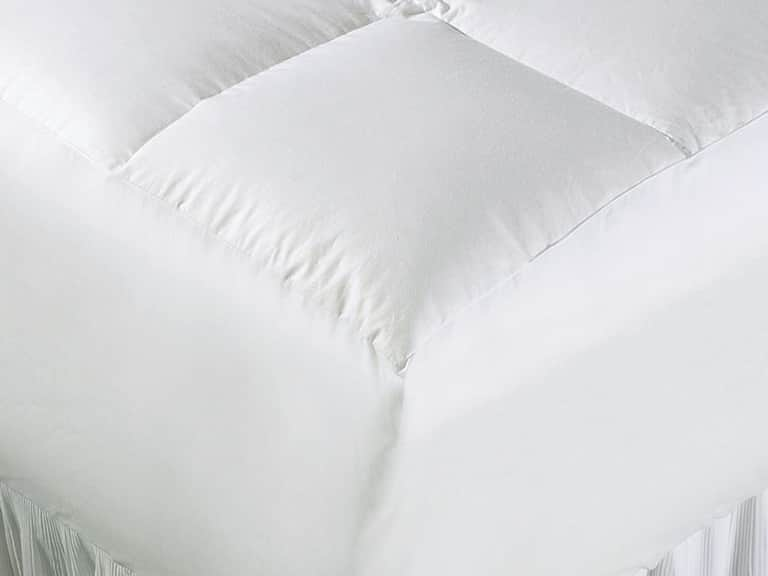
Remember that a comforter is only one layer in a sleep system. A mattress protector, mattress pad, sheet fabric, blanket, and duvet cover each contribute something to the final temperature and feel. A down-alternative mattress pad, for example, adds cushioning at the mattress surface; it does not replace the insulation decisions involved in choosing a down comforter.
Reading comforter specifications with care
Product descriptions can make comparison easier when you know which details to seek. Start with the stated seasonal weight, then check fill power, fill amount, construction, shell, dimensions, and care guidance. If the maker publishes different fill weights for different sizes, use the details for your own size rather than extrapolating from another one.
It is also worth checking what “weight” means in the specification. An ounce figure may refer to the down fill alone, not the total finished comforter, which includes the shell and construction. If the description does not clarify, avoid treating a listed number as the complete weight of the item. When comparing ranges, focus on what the manufacturer identifies consistently.
For specific examples, the Madison Goose Down Comforter and Manhattan Goose Down Comforter are each offered in summer, year-round, and winter weights. The published details distinguish their fills and shells: the Madison is described with 750 fill power Hungarian white goose down and a cotton cover, while the Manhattan is described with 850 fill power Hungarian white goose down and a TENCEL® lyocell shell. Both ranges also provide construction and size-specific fill information. These are useful details to compare, but neither fill-power figure should be read as a standalone promise of warmth.
Care, longevity, and responsible choices
A well-made comforter can be a long-term part of a bedroom, but its care routine affects how it performs over time. Follow the maker’s label, particularly when it comes to washing, drying, and professional cleaning. Down needs to dry thoroughly after washing; trapped moisture can compromise freshness and comfort. A duvet cover helps reduce contact with everyday dust and body oils, while regular airing can help the bed feel fresh between laundering.
Storage matters, too. When the comforter is not in use, keep it clean and fully dry, and avoid compressing it tightly for long periods if the care guidance recommends preserving its loft. A breathable storage bag is often preferable to a sealed environment that could retain moisture, but the manufacturer’s specific instructions should take priority.
For down, shoppers may also wish to understand sourcing and any relevant third-party standards or certifications. Look for clear, specific information rather than relying on broad claims. Responsible sourcing is an important part of evaluating a natural fill, alongside practical details such as construction, care, and expected use.
A concise comparison checklist
Before choosing, pause over the details that most directly affect comfort. A composed, considered decision is usually better than chasing the highest number on a label.
- Set your warmth preference. Decide whether you need a lighter, versatile, or more insulating comforter.
- Read fill power in context. Treat it as a measure of down loft, not a complete warmth scale.
- Check the fill amount. Confirm the figure for the size you intend to use and whether it describes fill or total product weight.
- Understand construction. Baffle boxes and sewn-through designs can create different profiles and ways of distributing down.
- Consider the shell. Fiber, weave, and finish influence drape, texture, and the overall look of the bed.
- Factor in your room. Heating, seasonal temperature changes, and other bedding layers all affect how warm a comforter feels.
- Review care and sourcing. Make sure the maintenance routine is realistic and the material information is sufficiently clear.
The most comfortable choice is personal
Down comforters offer a quietly luxurious kind of comfort, but the right one is less about prestige than proportion. Fill power describes the loft of the down. Fill quantity contributes to insulation. Construction influences how that fill is contained and distributed. Shell fabric shapes the surface and drape. And your room, preferences, and other bedding layers complete the equation.
Seasonal labels make a useful first pass: summer for a lighter layer, year-round for greater flexibility, and winter for more substantial warmth. Comparing the Madison and Manhattan ranges shows how those categories can be paired with different fill powers, shell fabrics, and constructions. Treat the specifications as a whole, rather than letting one impressive figure settle the decision.
In a city bedroom where space, heating, and seasons may shift from one month to the next, thoughtful layering can be especially practical. Choose a comforter that feels right for the conditions you experience most often, and use lighter or warmer layers as needed. The result should not simply look inviting; it should make the bed feel like the most comfortable place to end the day.